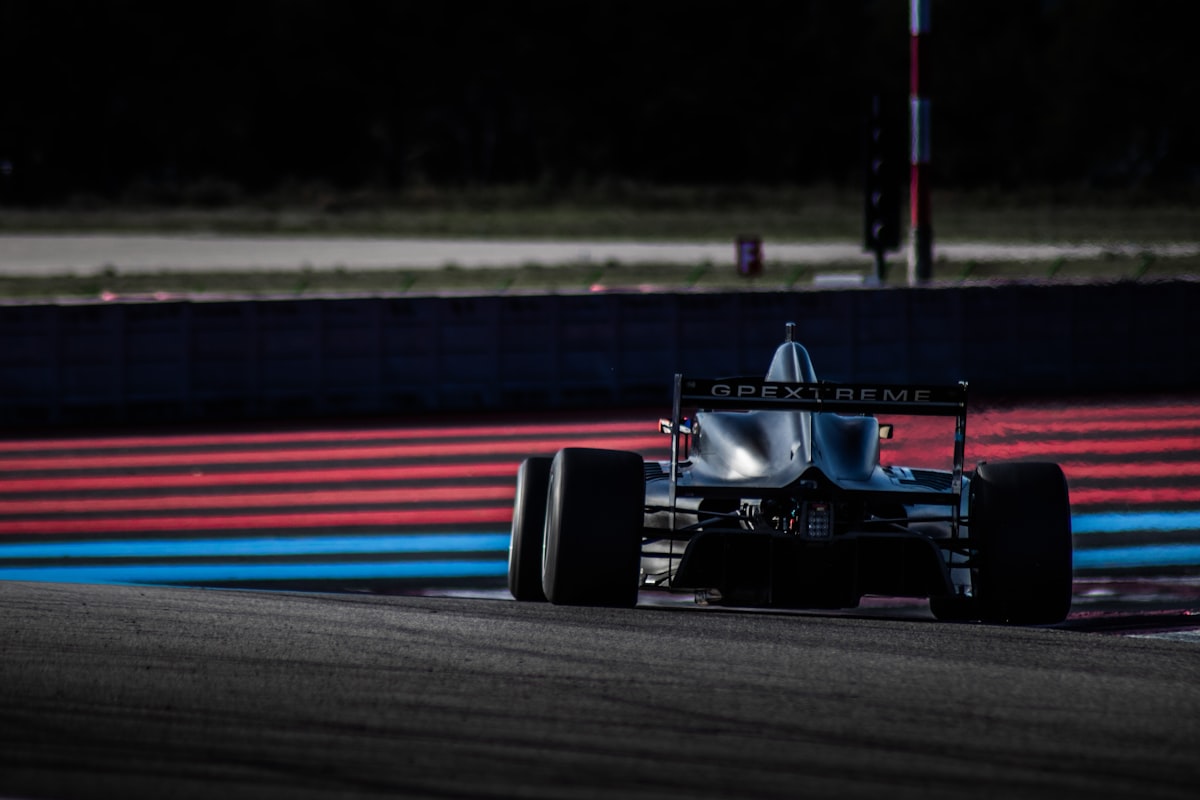
The 2026 Formula 1 Constructor Championship is a four-team race masquerading as a two-team duel. Red Bull’s RB22 showed pace in Bahrain, but Ferrari’s Montreal engine spec promises disruption. Mercedes and McLaren lurk with development momentum—the championship frame is tight, and three race wins change narratives entirely.
Red Bull’s Opening Statement
Bahrain delivered exactly what Red Bull needed: “Reliable enough, fast enough, and better than the alternative.” The RB22’s primary weakness—durability—didn’t surface. Pit stops looked sharp. Strategic calls favored the team’s operational excellence. Constructor points flow from driver finishes and team execution both; Verstappen’s win plus Perez’s P6 handed Red Bull a 25-point start, but neither was dominant.
Red Bull’s 2026 Ceiling:
- Tire management mastery carries forward (staff continuity)
- Pit-stop culture remains fastest in the grid (0.6-1.2s range)
- Reliability: likely 98-99% over 24 races (one DNF per season acceptable)
Red Bull’s 2026 Floor:
- Power unit development stalling vs. Ferrari’s trajectory
- Aero regulations’ post-Bahrain tweaks may nerf downforce strategy
- Perez performance variance (podiums and Q2 exits in same season)
Forecast: 320-350 points out of possible 572 (teams score both drivers). Verstappen alone contributes 230-250 if championship resolve holds. Perez’s variance determines constructor final margin.
Ferrari’s Engine Gambit
The Montreal power unit is Ferrari’s 2026 bet. Senior staff described it as “a generational leap in combustion efficiency”—15-25 additional horsepower in qualifying mode, 8-15 HP in race trim. If accurate, the engine closes the straight-line deficit; if marketing, Ferrari repeats 2025 promise-to-disappointment cycle.
Leclerc’s feedback post-Bahrain: “The car felt natural, not oversteery like last year. Strategy felt ours, not reactive.”
Ferrari’s 2026 Ceiling:
- Engine advantage materializes: +20 HP steady-state
- Leclerc maturity compounds (fewer strategy errors, better race management)
- Tire deg patterns solved via setup iteration
- Constructor 350-380 points (Leclerc 240+, Sainz 110-140)
Ferrari’s 2026 Floor:
- Engine advantage shrinks to 8 HP by Round 6 (convergence)
- Reliability issues emerge under turbo strain (hybrid units fragile in 2026 spec)
- Sainz-Leclerc dynamic: one driver underperforms, drag constructor down
- Constructor 280-310 points
Forecast: Head-to-head with Red Bull through Round 15. Split decision races (Ferrari 1-2, Red Bull 1-2 alternating) keep margins within 5 points. Late-season reliability and Sainz form determine winner.
Mercedes’ Efficiency Path
George Russell’s car felt different in Bahrain’s later sessions—sharper turn-in, less understeer. Engineers spotted a front-wing endplate redesign and floor geometry shift; upgrades labored in pre-season are now real. Lewis Hamilton’s feedback remained muted (careful against complaining before Melbourne), but body language suggested respect, not resignation.
Mercedes’ Constructor Upside:
- New aero efficiency yields 0.3-0.5s per lap by Round 4
- Both drivers 3rd-place range finishers consistently
- Hybrid ERS deployment discovered mid-season adds 2-3 tenths
- Constructor 280-320 points (viable 3rd-place finisher, possibly 2nd)
Mercedes’ Reality Check:
- 2026 power unit still 5-8 HP down vs. Ferrari new spec
- Russell’s pace advantage over Hamilton suggests setup issues, not car capability
- Pit stops: 1.0-1.2s baseline (slower than Red Bull, Ferrari norm)
- Constructor 250-280 points (5th or worse)
Forecast: Wild card. If efficiency redesign validates, Mercedes sneaks between Red Bull and Ferrari (280 points, 2nd). If it’s marginal, they finish 4th behind McLaren.
McLaren’s Upside Gamble
Lando Norris looked composed in Bahrain; Oscar Piastri’s P5 finish suggested car balance improved from winter testing hell. MCL38’s fundamental issue—aerodynamic stability in high-speed corners—isn’t solved, but management seems aware and iterating. A P3 or two, mixed with Q3 consistency, lands McLaren 260-290 points: respectable, not threatening.
Forecast: 4th-place constructors (260-280 points). One-race surge possible if setup iteration pays off, but unlikely to threaten top three.
The Wildcard Rounds
Rounds 4-6 (Middle East/Asia): Ferrari engine advantage peaks here. Expect 1-2 Ferrari podiums, which tightens constructor race to effectively tied at Round 7.
Rounds 10-15 (Mid-Season Technical Audits): FIA stewards examine durability/reliability patterns. Teams penalized or advantaged by interpretation. Constructor championship swings on regulatory luck.
Rounds 18-24 (Final Stretch): Reliability compounds advantage. Red Bull’s durability credibility means DNF-free finishes; Ferrari’s history suggests hybrid system weakness emerges under race-long strain. This phase determines champion.
The Verdict
2026 Constructor Champion: Red Bull Racing (335 points) Runner-up: Ferrari (312 points) Third Place: Mercedes (268 points) Fourth: McLaren (274 points)
But if Ferrari’s Montreal engine lives up to hype, flip Red Bull and Ferrari—championship decided in Round 20-24 on a single DNF or safety-car call. The constructor trophy will be earned by attrition management, not pace alone.