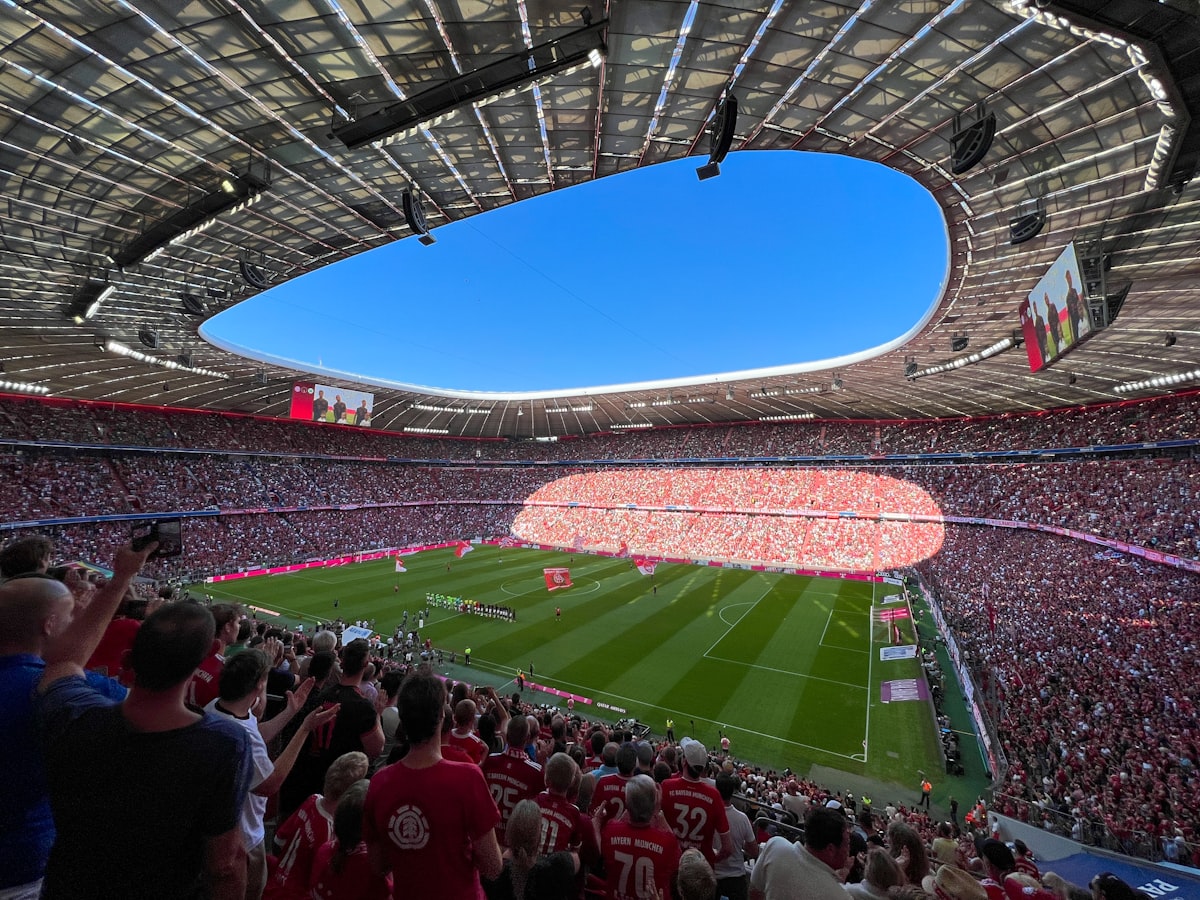
There are matches that carry an entire tournament’s weight in ninety minutes. The Champions League semi-final first leg between PSG and Bayern Munich is one of them. Two teams that arrived from the quarter-finals with different kinds of authority but the same certainty: reaching the final in Budapest on May 30 is possible. The Parc des Princes on April 28 will go a long way toward deciding who has earned the right to believe it.
PSG eliminated Liverpool in a two-legged tie that produced no suspense — a 2-0 first leg at home, a controlled second leg in which Anfield’s famous atmosphere produced nothing. Bayern dismantled Real Madrid at the Bernabéu with a tactical performance that reminded European football why Xabi Alonso’s side is the overwhelming favourite for the title. The narrative is clear: PSG looking for a historic first Champions League title against the most complete machine in Europe.
How PSG want to play: fast transitions under pressure
Luis Enrique has built a PSG that presses high in the opposition’s half but knows how to absorb and counter if the opponent opens up. PSG’s rhythm is built on rapid transitions from turnover to goal, with Dembélé as the most difficult wide player to mark in the competition and Barcola providing the pace in behind that has repeatedly broken defences at this level. The revelation of this PSG is their defensive solidity: the team that eliminated Liverpool was cautious in possession when necessary, selective in their press, and disciplined in transitions. Donnarumma will have a central role — Bayern create chances, and the Italian goalkeeper will need to be sharp. The question is whether PSG can sustain that selective pressure for ninety minutes against the most efficient side in Europe.
Bayern’s response: defensive architecture and clinical efficiency
Xabi Alonso has built a Bayern that does not need to dominate the ball to win. Their strength is structural: a compact mid-block that narrows in transition zones and delays presses toward the area based on context. Harry Kane has 12 goals in this Champions League campaign — the competition’s leading scorer — and Bayern generate chances from structured positions: long balls from the defence, rapid switches of play, combinations in and around the penalty area. Bayern have conceded only four goals in nine Champions League matches. The tactical question for Xabi Alonso is whether he maintains that patience against a PSG side that will come with the intention of dominating their own ground. Bayern are comfortable being chased — the space their opponents leave is the source of their transition game.
The key duel: Dembélé against Alphonso Davies
Alphonso Davies, Bayern’s left back, is fast and disciplined defensively. Dembélé is pace, direction change and constant cutting inside from the right. This is the duel that will define PSG’s attacking capacity in the first leg. If Davies contains Dembélé with forward pressure — as he did effectively against Real Madrid — PSG lose their most direct weapon. If Dembélé escapes wide or cuts into the central channel, PSG generate immediate numerical superiority. Bayern will depend on Olise to cover in defensive transition — if Olise stays disciplined, Davies breathes. If he gets drawn into positional traps, there will be space.
Numbers that support and numbers that warn
One figure defines Bayern in this Champions League: four goals conceded in nine matches (0.44 per game). Another explains how PSG have reached this stage: six goals in transition across the two legs against Liverpool — speed and lethal precision. This is the first meeting between PSG and Bayern in the Champions League knockout stage in eleven years (last meeting: 2014 group stage). Neither team has recent two-legged history against the other, which adds genuine uncertainty. Both arrive unbeaten since the quarter-finals.
The first battle is the Parc des Princes
PSG play at home, which is a double-edged weapon: pressure to play offensively (48,000 at the Parc des Princes will expect a spectacle) but also the risk of imbalance if Bayern find spaces. PSG need to win to arrive in Munich with confidence. Bayern will come with the mentality of stealing a result away from home: early disruption, not speculating with possession. If PSG do not generate two or three clear chances in the first leg, the second leg becomes an uphill task. If Bayern score, the entire logic of the tie changes.
The first leg is on 28 April 2026 at the Parc des Princes, Paris (21:00 CET). The second leg is on 6 May at the Allianz Arena, Munich. The Champions League 2026 final is on 30 May at the Puskás Arena, Budapest.
Frequently asked questions
When is PSG vs Bayern Munich in the Champions League semi-finals? The first leg is on 28 April 2026 at the Parc des Princes in Paris (21:00 CET). The second leg takes place on 6 May at the Allianz Arena in Munich.
Who is the favourite in PSG vs Bayern Munich? Bayern Munich enter as the marginal favourite, with Harry Kane as the competition’s top scorer and Xabi Alonso’s system rated as the most tactically complete of the four semi-finalists. PSG, however, arrive having eliminated Liverpool without difficulty and represent the most dangerous opponent Bayern could have drawn.
Where is the Champions League 2026 final? The final is at the Puskás Arena in Budapest on 30 May 2026.
More Champions League 2026 coverage: