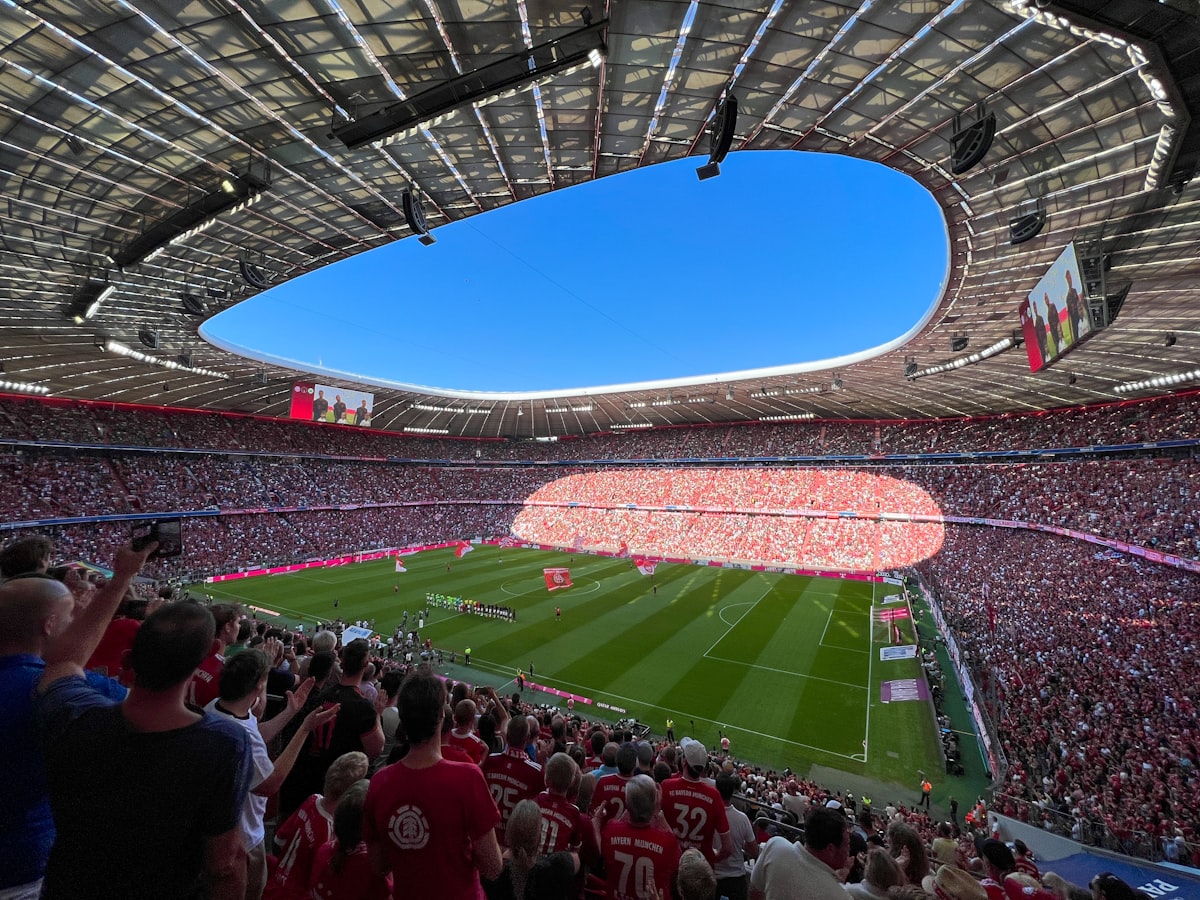
Germany’s 2024 was a nightmare—eliminated in the group stage at Euro 2024, a result that hadn’t happened since 1968. Now comes the reckoning. Florian Wirtz (Bayer Leverkusen) at 21 is already one of Europe’s most complete attacking midfielders. Jamal Musiala (Bayern Munich) is the heir to Müller’s throne. Manuel Neuer at 38 will finally retire, ending an era. This is generational reset and redemption rolled into one. Germany doesn’t lose gracefully—they rebuild ferociously. Expect no mercy.
Die Mannschaft Rebuilt
Goalkeeping: Manuel Neuer (Bayern Munich) will almost certainly retire after 2026, ending one of the greatest goalkeeper careers in history. Marc-André ter Stegen (Barcelona) or Alexander Nübel (Stuttgart, on loan) become the new guardians of German tradition. The transition will be handled with Germanic precision.
Defense: Antonio Rüdiger (Real Madrid) is the experienced leader. Mats Hummels will be in his late thirties—still effective but clearly a stopgap. Jonathan Tah (Bayer Leverkusen) is the future. On the flanks, David Raum (RB Leipzig) provides pace on the left, while Jeremie Frimpong (Bayer Leverkusen) on the right combines athleticism with creativity. Thilo Kehrer (Borussia Mönchengladbach) provides defensive solidity.
Midfield: Florian Wirtz (Bayer Leverkusen) is the new leader—technical, intelligent, goal-scoring threat. Jamal Musiala (Bayern Munich) will shift forward as Wirtz’s partner. Toni Kroos (Real Madrid) remains available as a reserve despite his age; his presence lifts the entire team’s composure. Leon Goretzka (Bayern Munich) provides physicality. Pascal Groß (Brighton) is the unsung presence.
Attack: The #9 is unresolved. Serge Gnabry (West Ham, likely) plays wide. Kai Havertz (Arsenal) is the creative outlet. Thomas Müller at 36 may continue as an “Ältester” (elder statesman) providing intelligence in the final third. Germany’s striker situation is a genuine weakness—no dominant goalscorer like Kane or Mbappé.
The German Crucible
The missing #9: Germany has no elite center-forward. Niclas Füllkrug is a Werder Bremen grinder. Serge Gnabry is a winger. This isn’t 2014 (Mario Götze), 2010 (Mario Gómez), or 1974 (Gerd Müller). Finding a goalscorer is critical.
Neuer’s retirement timing: Losing the greatest goalkeeper of your generation right at a World Cup is a transitional moment. Ter Stegen is world-class, but he’s not Neuer. Expect some vulnerability.
Toni Kroos’s availability: At 36, can he truly contribute, or is he a talisman? Germany’s midfield intelligence depends on whether Wirtz and Musiala can handle the burden alone.
Thomas Müller’s role: At 36, Der Bomber is a mentor and occasional playmaker, not a consistent starter. Germany’s attack lacks a clinical finisher.
Probable 26-Man Squad
Goalkeepers (3): Manuel Neuer, Marc-André ter Stegen, Alexander Nübel
Defenders (8): Antonio Rüdiger, Mats Hummels, Jonathan Tah, David Raum, Jeremie Frimpong, Thilo Kehrer, Kai Havertz (as defender in buildup), Waldemar Anton
Midfielders (8): Florian Wirtz, Jamal Musiala, Toni Kroos, Leon Goretzka, Pascal Groß, İlkay Gündoğan, Jude Bellingham (if available via nationality), Mahmoud Dahoud
Forwards (7): Thomas Müller, Serge Gnabry, Kai Havertz, Niclas Füllkrug, Leroy Sané, Ousmane Dembélé (if available), Florian Kainz
Note: Official roster announced in May. This projection updates with confirmed callups in Phase 2.
Germany at World Cup 2026: The Wilderness and Return
| Strength | Weakness |
|---|---|
| Wirtz + Musiala creative axis | No dominant center-forward |
| Defensive solidity (Rüdiger + Tah) | Neuer’s retirement timing |
| Midfield intelligence and experience | Müller’s age and role uncertainty |
| Rebuild mentality (hungry) | Toni Kroos’s conditional availability |
The Verdict
Germany is in transition, but transition for Die Mannschaft often means reorganization into a better machine. Wirtz and Musiala are genuinely elite talents. Rüdiger is a world-class defender. But without a reliable goalscorer, Germany will struggle against teams that absorb pressure and hit on the break.
This isn’t a World Cup-winning squad in 2026. This is a team building for 2030. The humiliation of Euro 2024 will drive them forward, but they’re not favorites. If anything, expect them to be dangerous dark horses—dangerous in the sense that Wirtz and Musiala can create moments of brilliance, but ultimately stalled by the lack of a lethal finisher.
Expected finish: Quarterfinals to Semifinals (ceiling). Germany’s redemption tour begins in 2026, but the trophy won’t be their prize. It will be the foundation for dominance in future tournaments.