Champions League 2025-26: The Quest for European Glory
The 2025-26 Champions League season represents the pinnacle of European club football. With 36 teams entering a league-phase format and playing 8 group games (instead of traditional groups), the competition is more open and competitive than ever. As we approach the knockout stages, several elite clubs have emerged as contenders capable of lifting the trophy in May 2026.
The Competition Structure: League Phase to Finals
The 2025-26 Champions League features an evolved format: 36 teams in a single league phase, playing 8 games each (instead of groups). The top 8 teams advance directly to the Round of 16; teams 9-24 compete in a playoff round; teams 25-36 are eliminated. This structure creates more unpredictability—a team can finish 7th or 8th and still advance directly, while a 10th-place team faces playoff elimination.
Key implications:
- More elimination scenarios: Failure in the league phase is more consequential. A poor campaign might relegate a strong team to playoff purgatory.
- Different preparation: Teams must balance domestic league priorities with Champions League consistency. The league phase requires sustained performance across 8 games.
- Playoff drama: The 9-24 playoff round creates underdog opportunities. A strong team that finished 15th in league phase faces a single-elimination 180-minute tie—anything can happen.
The Elite Contenders
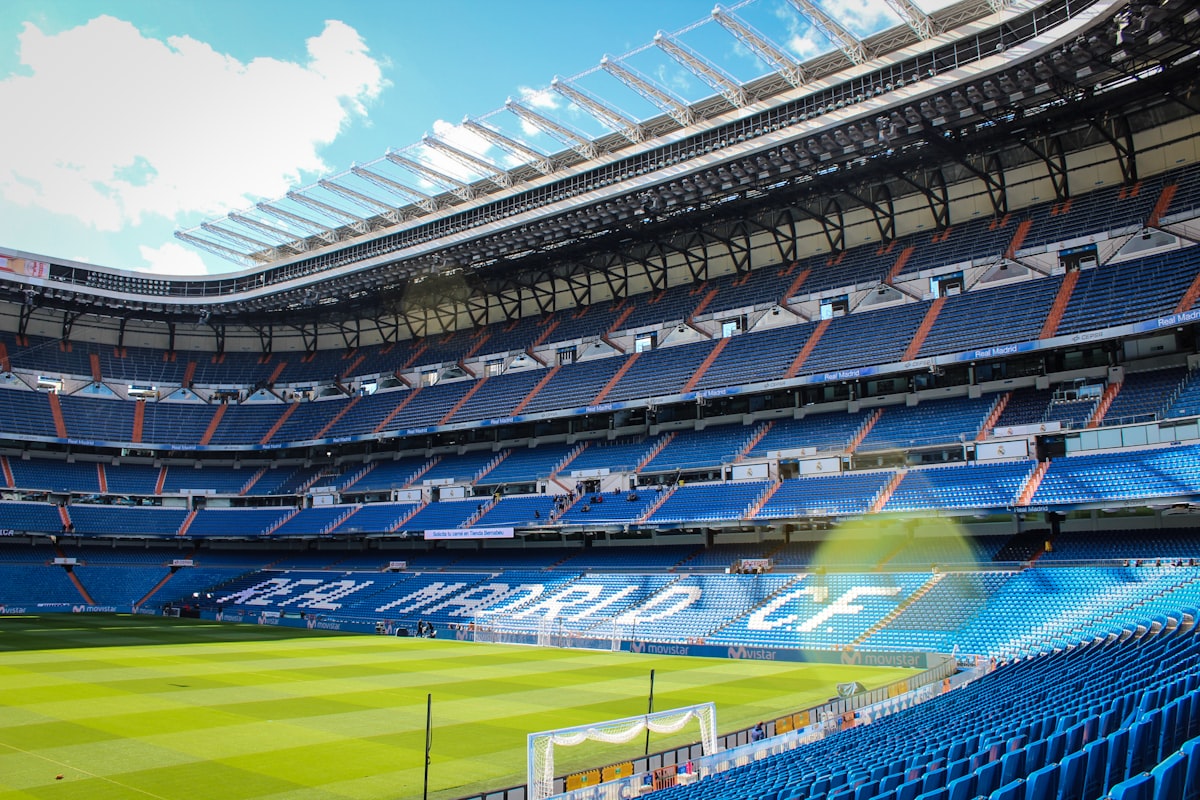
Real Madrid remains the benchmark. With 15 Champions League titles and a tradition of big-game excellence, Real Madrid has squad depth, experience, and the mentality to win tight matches. Their combination of proven winners (Benzema era), emerging talent, and tactical flexibility under their manager makes them formidable.
Manchester City has dominated recent Champions League campaigns with their systematic approach. Their possession-based system, pressing efficiency, and ability to control games make them dangerous in group phase and knockout football alike.
Bayern Munich continues to field elite squads with strong domestic backing. Bayern’s consistency, squad depth, and attacking threat make them perennial contenders.
PSG possesses star-studded attacking talent but has historically disappointed in knockout rounds. Their 2025-26 campaign depends on whether they’ve addressed their defensive vulnerabilities and tactical rigidity.
Manchester United and Liverpool emerge as contenders depending on their domestic league success. English clubs’ strength in depth often translates to Champions League competitiveness.
Tactical Frameworks: Group Phase vs. Knockout Football
Group phase football emphasizes variety and experimentation. Teams often rotate squad, test tactical setups, and prioritize domestic league fixtures. A team might play 5-3-2 in one group game, 4-2-3-1 in another, searching for the right balance.
Knockout football is more conservative. Teams emphasize:
- Defensive compactness: Preventing opposition through-passes and cutting off numerical advantages. The 4-4-2 compact block is common.
- Wide play efficiency: Winning games on the flanks through fullback crosses and set-pieces rather than central penetration.
- Transition exploitation: In a knockout tie, one good counterattack or set-piece goal can shift the momentum of a 180-minute tie.
- Psychological resilience: Extra-time and penalties create mental pressure. Teams that don’t panic when facing adversity advance.
Key Positional Battles in Knockout Football
Full-back positioning: In knockout football, fullbacks face 1v1 or 1v2 situations against wingers. Teams with strong full-backs (who combine defending with counterattacking runs) gain advantage. Modern fullbacks are expected to defend, pass, cross, and even dribble—a demanding role.
Central midfield dominance: The team that controls central midfield often controls the tie. A defensive midfielder who breaks up opposition play and a box-to-box midfielder who carries the ball forward can dominate possession and limit opposition transitions.
Striker isolation: In knockout football, the strikers often operate in isolation, receiving long balls or quick passes in tight spaces. Strikers must be clinical finishers and good at link-up play, creating for teammates when personal shooting opportunities dry up.
2025-26 Contender Profiles
Real Madrid: Experience and mentality. Real Madrid’s advantage in Champions League knockout football is psychological. They’ve won tight matches, come from behind, and adapted to opposition when needed. Their experience with pressure is unmatched. Weakness: aging squad requires careful squad management.
Manchester City: Systematic dominance. City’s strength is their possession-based system that controls games from start to finish. Few teams defend as compactly or attack as fluidly. Weakness: their systematic approach can be disrupted by chaotic, direct opposition (long-ball tactics, physical pressing).
Bayern Munich: Versatility and depth. Bayern’s strength is their ability to play multiple systems—pressing, possession, direct—depending on opposition. Their squad depth means injuries don’t derail campaigns. Weakness: sometimes lack the cutting-edge creativity of top rivals.
PSG: Star power and individual brilliance. PSG’s advantage is their attacking talent—the ability to produce magical moments. Mbappe, Neymar, or other stars can win games individually. Weakness: defensive vulnerabilities and lack of tactical cohesion in tight matches.
Common Championship Patterns
Champions League winners typically share traits:
- Strong European record: They’ve won 2-3 European titles in the last decade.
- Domestic dominance: They dominate their domestic league, indicating squad strength.
- Knockout experience: Key players have won Champions Leagues previously.
- Tactical flexibility: They can adapt systems based on opposition.
- Clinical finishing: They convert chances efficiently, especially in knockout rounds where opportunities are limited.
The Underdog Factor: Surprises in Champions League History
Champions League history features shocking underdog runs—Arsenal’s 2006 final, Liverpool’s 2005 comeback, Leicester’s recent dominance. These remind us that elite squads and experience aren’t everything. A well-organized underdog, favorable draws, and a bit of luck can create magical runs.
Teams to monitor from outside the “Big Five” favorites: Atlético Madrid (defensive specialists), Inter Milan (rising Italian power), and Borussia Dortmund (if they stabilize domestically).
Conclusion: May 2026 Glory Awaits
The 2025-26 Champions League season is wide open with multiple elite contenders capable of winning. Real Madrid’s experience, Manchester City’s system, and Bayern’s versatility make them favorites. However, the evolved league-phase format creates opportunities for strong teams outside the typical elite. The path to glory in May 2026 will be determined by knockout-round resilience, tactical adaptation, and the ability to perform under the immense pressure of European club football’s premier competition.